
NORTHERN GULF COAST · NOVEMBER 8–14, 2026
Every autumn, Gulf sturgeon leave their warm-season river habitat for bays, estuaries, and coastal waters. Their remarkable annual journey connects two very different worlds.
AN ANNUAL RHYTHM
A year between river and sea
SPRING & SUMMER
River season
Adults spend the warmer months in freshwater rivers; spawning can occur in spring.
FALL · SEPT–NOV
Downstream migration
Many fish travel toward estuaries and coastal waters as the seasons change.
COOL SEASON
Coastal feeding
Sturgeon feed in estuarine and marine habitat before returning upriver.
01 · MIGRATION
What is happening?
Gulf sturgeon (Acipenser oxyrinchus desotoi) spend much of the warmer part of the year in freshwater rivers. As autumn progresses, subadults and adults migrate downstream into estuaries, bays, and nearshore marine waters to spend the cooler months feeding. Scientists document this movement from September through November, with timing varying by river, conditions, and individual fish.
02 · ECOLOGY
Why the journey matters
A single species depends on several connected habitats. Gulf sturgeon reproduce in freshwater river systems, spend long periods upriver in warmer months, and feed primarily in estuarine and marine waters when the weather is cooler. Their migration relies on access between these places.
FIELD GUIDE · AT A GLANCE
Typical migration: September–November, varying by river and year.
Range: Connected river systems, estuaries, and coastal waters of the northern Gulf Coast, broadly Louisiana to Florida.
This week: November 8–14 lies within the documented fall migration window, without confirming a specific local movement.
03 · LIFE HISTORY
Meet the Gulf sturgeon
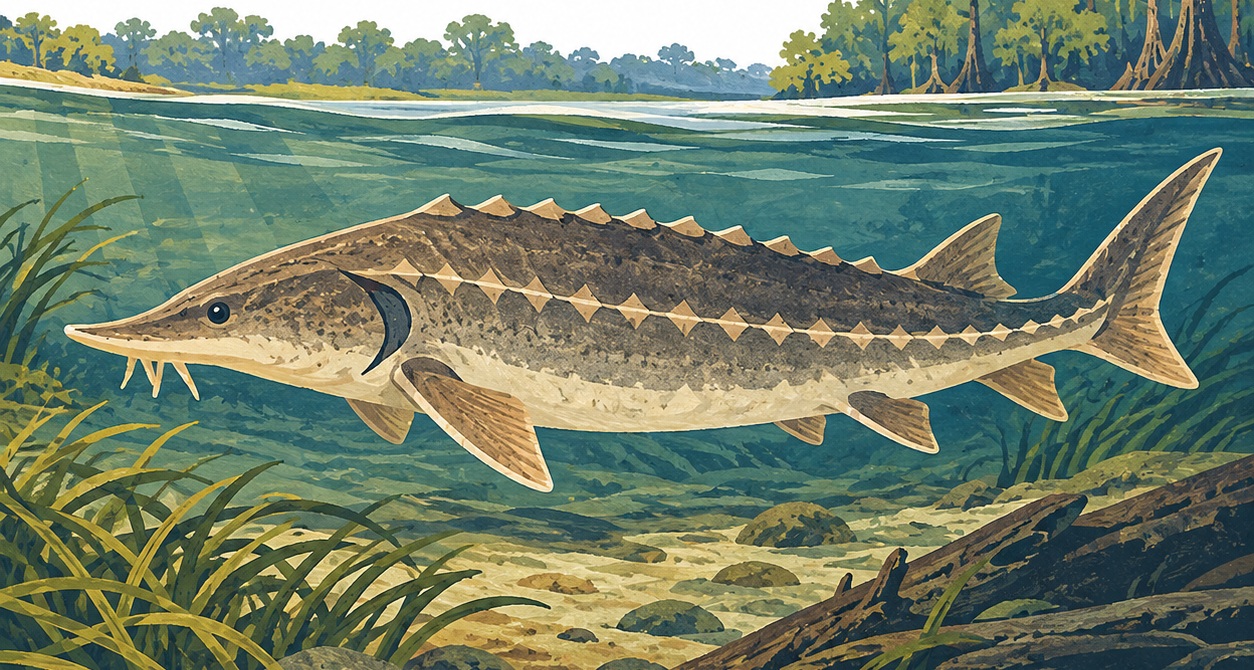
This large, long-lived fish has a pointed snout, four sensory barbels, and rows of hard bony plates called scutes. Adults feed little or not at all during much of their extended freshwater residence, then forage in brackish and marine waters during the cooler season.
04 · CONSERVATION
Protecting the journey
Gulf sturgeon are federally listed as threatened. Dams and other barriers, changes to river habitats, degraded water quality, and disturbances along migration routes underscore why healthy, connected river-to-coast ecosystems matter. Observe wildlife without disturbing it and support efforts to conserve river, estuarine, and nearshore habitats.
EVIDENCE NOTE
Seasonal pattern ≠ local sighting
The September–November migration period is documented in scientific research. This article does not claim that Gulf sturgeon were observed moving through Mobile Bay during November 8–14, 2026.
RESEARCH & REFERENCES
How we know
Feral Circadium distinguishes well-established seasonal ecological patterns from confirmed observations. The current feature is based on migration and life-history research.

